GPT-5.6 Pricing: What Sol, Terra, and Luna Cost per Token
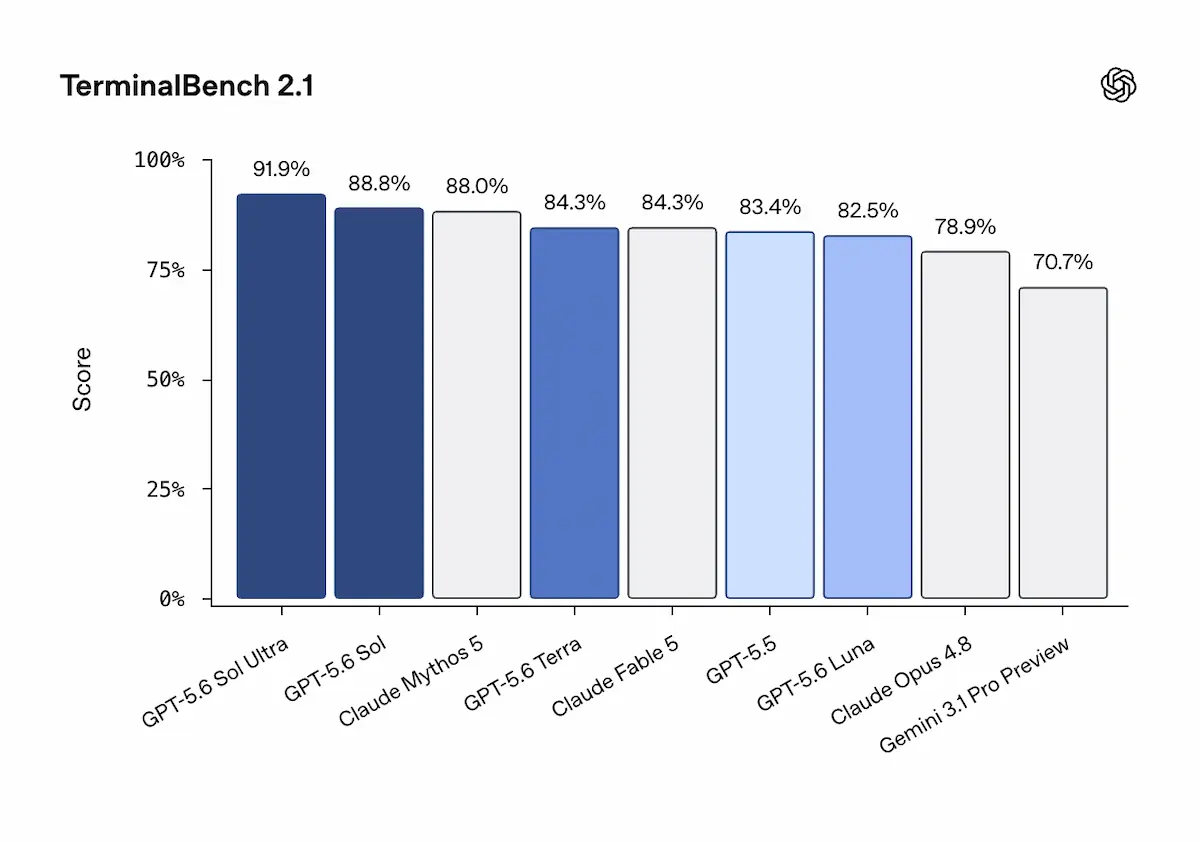
OpenAI's GPT-5.6 family arrives in three priced tiers, Sol at $5/$30, Terra at $2.50/$15, and Luna at $1/$6 per 1M input/output tokens, which means your model pick now moves gross margin more than your prompt does.
Key takeaways
- GPT-5.6 ships in three tiers: Sol (flagship), Terra (mid), and Luna (value).
- Reported pricing per 1M tokens: Sol $5 in / $30 out, Terra $2.50 in / $15 out, Luna $1 in / $6 out.
- Output costs 6x input on every tier, so response length, not prompt length, is the real cost driver.
- It is a limited partner preview first, with wider access expected in the following weeks.
- Routing a workload from Sol to Luna can cut token cost by roughly 5x for the same shape of traffic.
What is GPT-5.6, and why three tiers?
GPT-5.6 is OpenAI's newest frontier line, released first as a restricted preview to trusted partners before a broader rollout. The notable part for builders is not the names but the structure: instead of one price, OpenAI is shipping a capability-and-cost ladder. Sol is the flagship, Terra sits in the middle, and Luna is the value option. A tiered family is a pricing signal: OpenAI wants you to match each task to the cheapest tier that still clears your quality bar, rather than paying flagship rates for every call.
How much does each GPT-5.6 tier cost?
Here are the reported list prices, per 1M tokens:
| Tier | Input ($/1M) | Output ($/1M) | Output-to-input ratio | |------|--------------|---------------|-----------------------| | Sol | $5.00 | $30.00 | 6x | | Terra | $2.50 | $15.00 | 6x | | Luna | $1.00 | $6.00 | 6x |
Two things stand out. First, the tiers step down cleanly: Terra is half of Sol, and Luna is roughly a fifth. Second, the 6x output-to-input ratio is identical across all three, which tells you the cost behavior is the same at every tier even though the absolute numbers change.
Why does the output price matter more than the input?
Because output is 6x more expensive than input on every tier, the cheapest lever you have is shorter responses. Say a task reads a long 4,000-token prompt and returns a tight 500-token answer. On Sol that is about $0.02 for input and $0.015 for output, so input dominates. Flip it to a chatty 2,000-token answer and output jumps to $0.06, now four times the input cost. The lesson holds at any tier: trimming verbose completions, capping max tokens, and asking for structured short answers cuts your bill faster than shaving the prompt.
How do the tiers change your unit economics?
Imagine a feature that runs 100,000 calls a month, each with 1,000 input tokens and 1,000 output tokens. That is 100M input and 100M output tokens monthly. Illustratively:
- Sol: (100M x $5) + (100M x $30) = $500 + $3,000 = $3,500/mo
- Terra: $250 + $1,500 = $1,750/mo
- Luna: $100 + $600 = $700/mo
Same workload, same volume, a 5x swing in cost of goods sold purely from tier choice. If that feature is bundled into a $20/mo plan, the tier you pick can be the difference between a healthy margin and serving at a loss. This is exactly the kind of scenario worth modeling before you commit, and you can simulate each tier side by side in Calcaas.
Which GPT-5.6 tier should you actually use?
Default to the lowest tier that passes your evals, then promote only the calls that fail. A common pattern: run Luna or Terra for routine traffic, and route hard or high-value requests to Sol. Because all three share the same 6x output ratio, your prompt and output discipline carries over cleanly when you switch tiers, so you can route by difficulty without re-tuning your cost assumptions.
The takeaway: with GPT-5.6, tier selection is now a first-class pricing decision, so model the per-tier margin impact before access opens rather than after your bill arrives. Want to see it for your own numbers? You can model each tier against your real volume in Calcaas.
Frequently asked questions
How much does GPT-5.6 Sol cost?
GPT-5.6 Sol is reported at $5 per 1M input tokens and $30 per 1M output tokens. It is the flagship tier, so it is the most expensive of the three and best reserved for your hardest or highest-value calls.
What is the cheapest GPT-5.6 model?
Luna is the value tier at $1 per 1M input tokens and $6 per 1M output tokens, roughly a fifth of Sol's price. It is the natural default for routine, high-volume traffic where flagship quality is not required.
Is GPT-5.6 available to everyone?
Not yet. GPT-5.6 launched as a restricted preview for trusted partners first, with broader access expected in the following weeks. Pricing and availability can shift before general release, so treat the figures as the launch baseline.
Why is output so much more expensive than input?
On every GPT-5.6 tier, output tokens cost 6x input tokens. This reflects how generation is more compute-intensive than reading context, and it means controlling response length is the most effective way to manage your spend.
How do I compare GPT-5.6 costs to other models?
Translate each model into the same workload: expected input and output tokens per call times your monthly call volume, then compare total cost. A pricing simulator like Calcaas lets you plug in tiers and volumes to compare side by side.
More from the blog
 LLM Economics
Custom AI Chips Will Reshape Token Prices: What Builders Should Do Now
Custom silicon from OpenAI, Google, Apple and SpaceX is built to cut inference cost, but that does not guarantee cheaper API prices for you, so model your margins across price scenarios instead of betting on one rate.
 LLM Economics
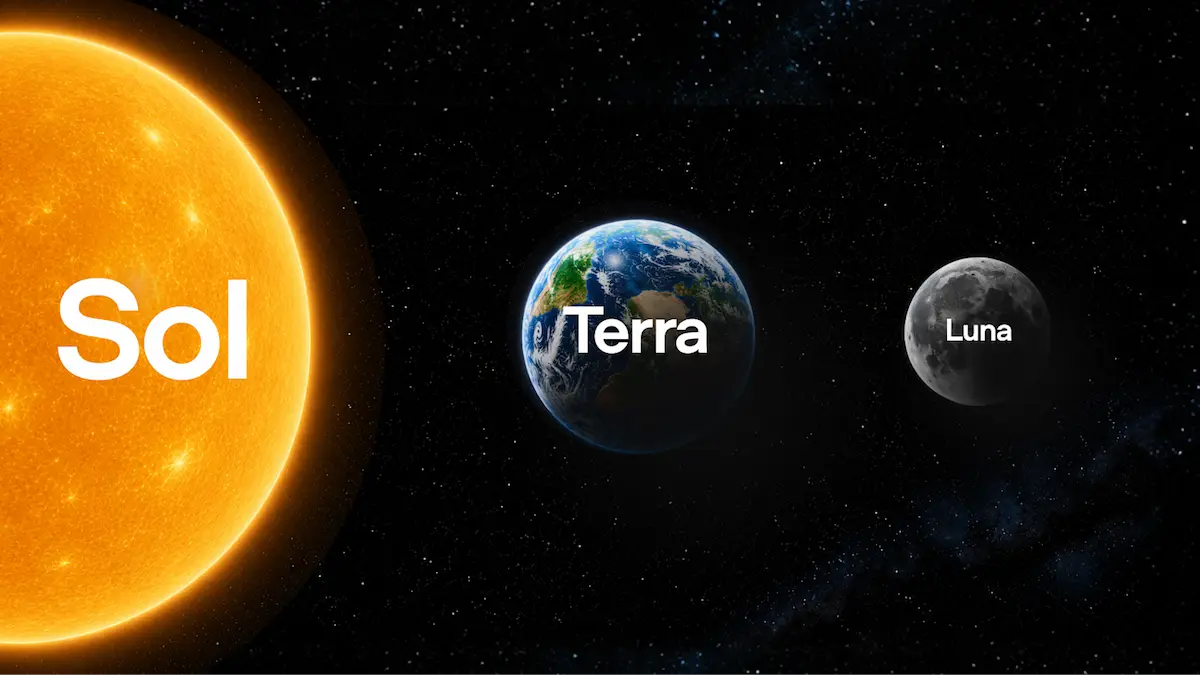
GPT-5.6 Pricing Explained: Sol vs Terra vs Luna Cost Breakdown
GPT-5.6 ships in three tiers, Sol at $5/$30, Terra at $2.50/$15, and Luna at $1/$6 per million tokens, so the cost decision is now about routing each task to the cheapest tier that clears your quality bar.
 LLM Economics
How to Cut Your LLM API Costs and Protect Your SaaS Margins
A cheaper model can swing gross margin from roughly 30% to 85%, but only if you model your real token mix first: output tokens, not the headline input price, decide your unit economics.
Pricing math, in your inbox.
One short note a week on AI pricing, token economics, and margin. No spam, unsubscribe anytime.