Governed AI Usage: How an AI Gateway Controls Token Spend
An AI gateway is a control plane that wraps every model request with identity, policy, safety, and observability, turning unpredictable token spend into a number you can govern and price against.

Key takeaways
- An AI gateway sits between your app and the models and enforces identity, policy, safety, and observability on every request.
- Controlling token spend is a control-plane problem, not a prompt-tuning problem.
- One reported result: retrieving only the tools a request needs, instead of stuffing everything into context, cut inference tokens by up to 99%.
- Predictable per-request cost is the precondition for confident usage-based pricing.
- Govern the cost first, then price against the floor it creates.
What is an AI gateway?
An AI gateway is a single chokepoint that every model request passes through on its way to a provider. Instead of each service calling models directly, calls flow through one layer that does four jobs: identity (which user or service is calling), policy (which model they get, what they can do, and what limits apply), safety (guardrails on inputs and outputs), and observability (what each request actually cost in tokens). Think of it as the control plane for your AI spend.
Why is token spend a control-plane problem?
Because spend is decided at request time, not at the end of the month. Every choice about which model to call, how much context to attach, and how many tools to expose happens per request, scattered across your code. A common and expensive habit is context stuffing: loading every possible tool, document, and instruction into the prompt just in case the model needs it. It feels safe and quietly multiplies the token bill on every call. The source for this piece reports that switching to active retrieval, pulling in only the tools a request actually needs, cut inference tokens by up to 99%. You cannot fix a request-time problem with a month-end report, you fix it where the requests flow.
How does an AI gateway cut token costs?
Once requests pass through one layer, several levers open at once. The gateway can route each request to the cheapest model that can handle it. It can retrieve only the relevant tools and context instead of shipping everything. It can cache repeated context so you pay full price once. And it can apply per-caller limits so no single user or agent runs away with your budget. None of these require touching individual prompts in a dozen services, you change one layer.
The part founders care about: this makes usage-based pricing safe
Here is the angle the architecture write-ups tend to skip. The real prize is not only a smaller bill, it is predictability. If one customer's agent can accidentally 100x its own token use, usage-based billing becomes a liability: your cost per customer swings wildly and your margin with it. A gateway caps the blast radius. When per-customer cost stops spiking, it becomes stable enough to charge against with confidence. Governed usage is the precondition for usage-based pricing, not a side effect of it.
How do you start small?
You do not need a full platform on day one. Put a thin proxy in front of your model calls, log tokens per customer and per feature, then add two things: model routing and a hard per-caller cap. That alone gives you attribution and a safety limit. From there you can layer in active retrieval, caching, and policy as the spend justifies it.
The takeaway: govern token spend at the gateway, then re-model your pricing against the predictable cost floor it creates. You can model those token costs, tiers, and margins in Calcaas before you commit to a usage-based plan.
Frequently asked questions
What is an AI gateway?
An AI gateway is a control layer between your application and the model providers. Every request passes through it, and it handles identity, policy and routing, safety guardrails, and per-request cost observability. It gives you one place to govern AI usage instead of scattered, direct model calls.
How does an AI gateway reduce AI costs?
It centralizes the decisions that drive cost: model choice, context size, tool exposure, and caching. From one layer it can route to cheaper models, retrieve only what a request needs, cache repeated context, and cap runaway callers. The source reports that active retrieval alone cut inference tokens by up to 99% versus stuffing everything into context.
Why does governance matter for usage-based pricing?
Because usage-based pricing only works if usage is predictable. If a single customer can spike their own token consumption by accident, your cost per account and your margin become unstable. Governing usage at the gateway caps that risk and makes per-customer cost stable enough to price on.
Do small teams need an AI gateway?
Not a heavy one. Early on, a thin proxy that logs tokens per customer and enforces a hard cap covers most of the risk. You can add routing, retrieval, caching, and policy later as spend grows and the savings justify the work. Place this JSON-LD inside a `<script type="application/ld+json">` tag in the page head. The questions and answers must match the visible FAQ text exactly.
More from the blog
 LLM Economics
Your Load Balancer Is Quietly Inflating Your LLM Bill
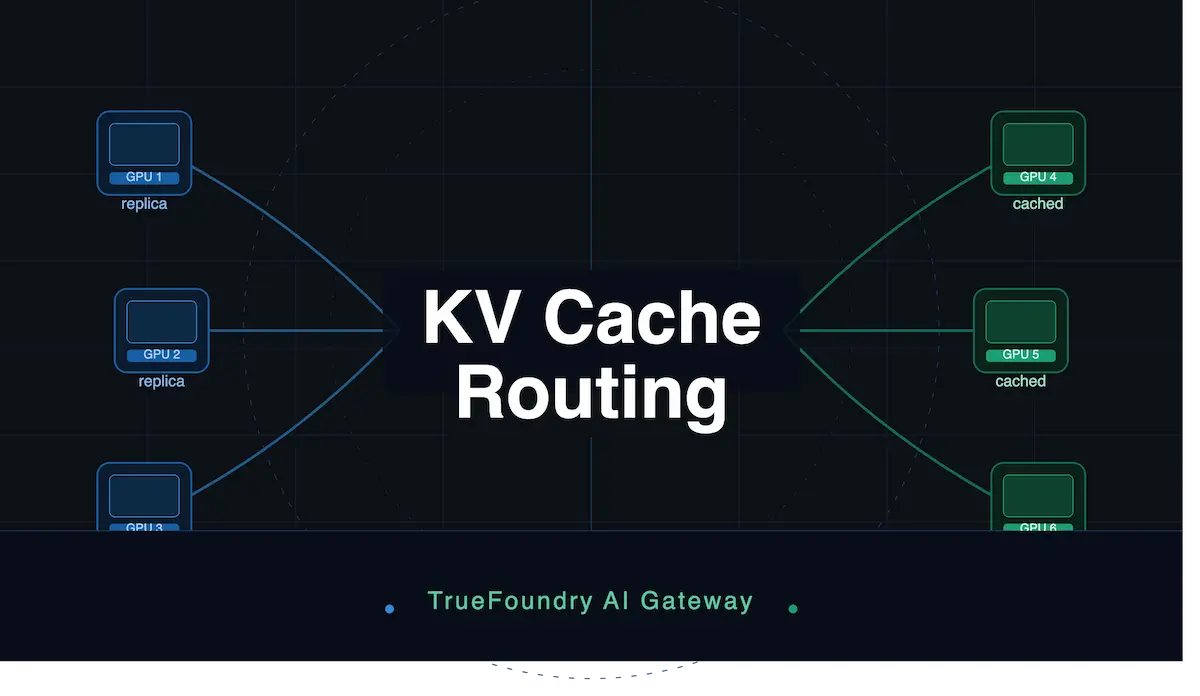
Standard load balancers scatter requests across servers at random, which breaks prefix caching and makes you pay full price for tokens you already cached. Prefix-aware routing fixes it.
 LLM Economics
Best AI Cost Optimization Tools in 2026: A Buyer's Framework
The best AI cost optimization tool depends on four things: how deeply it attributes spend, whether it can enforce limits, how much of your stack it covers, and whether it connects cost to pricing.
 LLM Economics
AI Cost Optimization in 2026: A Practical Guide for Founders
Cut your AI bill in 2026 by working five levers in order, model routing, prompt size, caching, output limits, and inference efficiency, then re-check that your pricing still covers the new cost basis.
Pricing math, in your inbox.
One short note a week on AI pricing, token economics, and margin. No spam, unsubscribe anytime.